
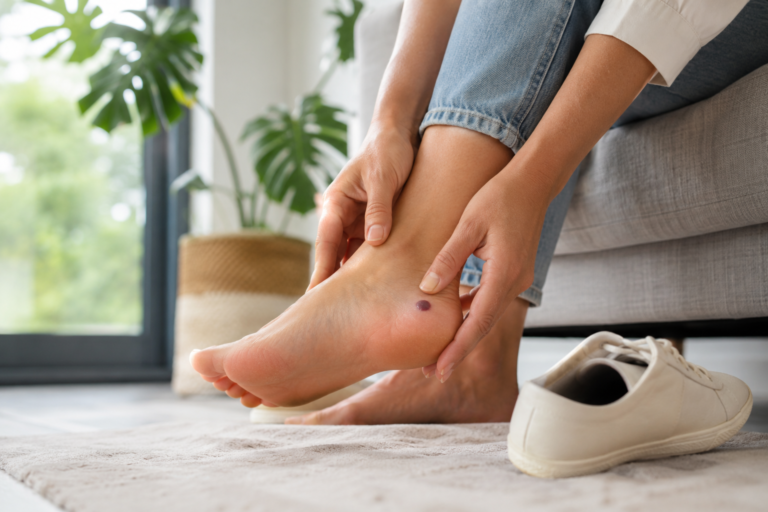
נתקלתם בבליטה אדומה או סגולה על האצבע, בכף הרגל או בעקב לאחר מכה או שפשוף? ייתכן שמדובר ב-שלפוחית דם — תופעה נפוצה שלרוב נראית מדאיגה יותר מכפי שהיא באמת.
שלפוחית דם נוצרת בדרך כלל כאשר העור נצבט, נלחץ או מתחכך, אך אינו נפתח. כלי דם קטנים שמתחת לעור נפגעים, והדם נאסף בתוך כיס קטן שמגן על האזור הפגוע בזמן ההחלמה.
ברוב המקרים, שלפוחית מלאה בדם מחלימה מעצמה בתוך כשבוע, ללא טיפול רפואי מיוחד. עם זאת, שלפוחית כואבת מאוד, מזוהמת, חוזרת או כזו שמופיעה באזור חריג דורשת בדיקה מקצועית.
מהי שלפוחית דם?
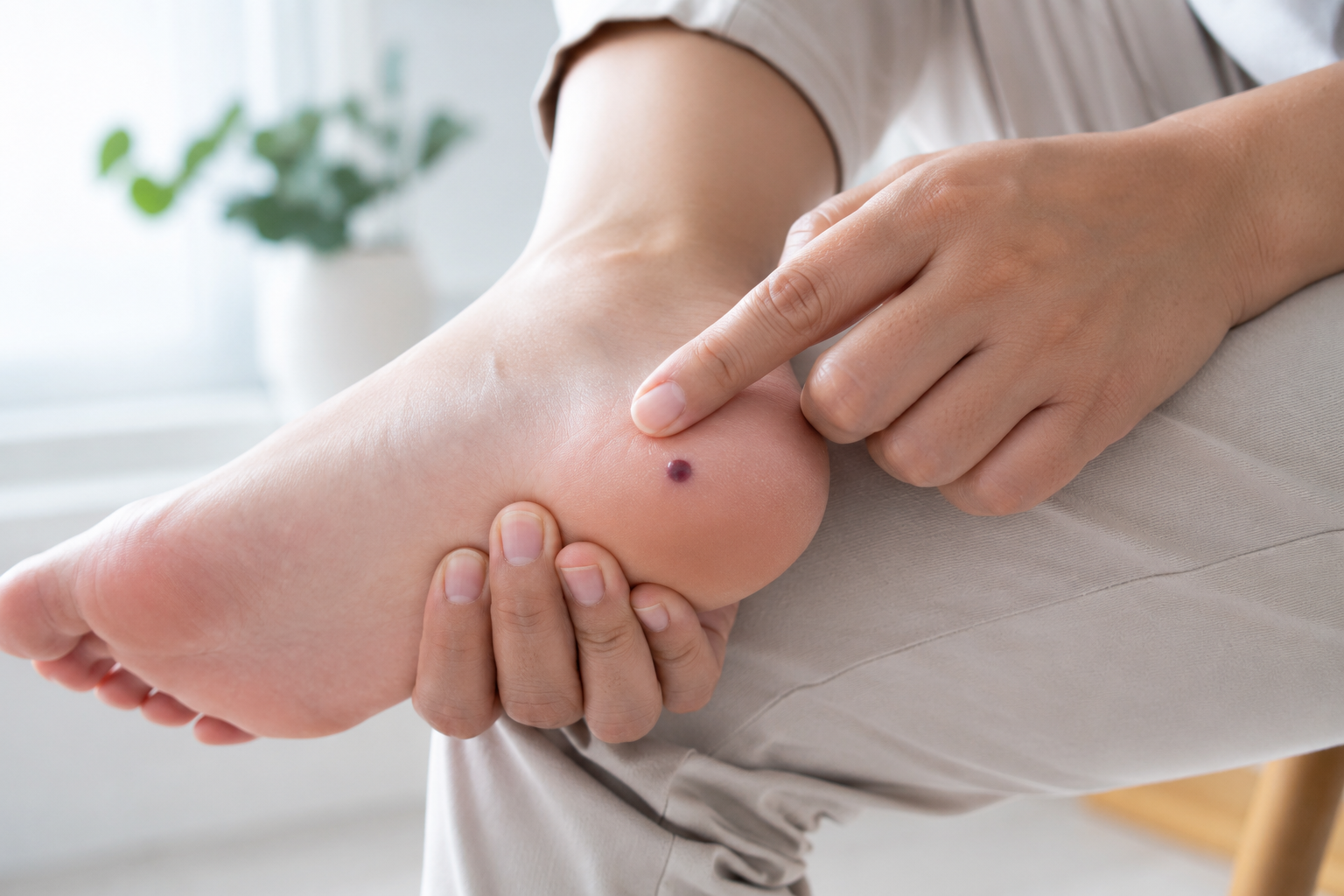
שלפוחית דם היא כיס קטן ומורם על פני העור, שבתוכו מצטבר דם במקום נוזל שקוף. היא נוצרת כאשר שכבת העור החיצונית נפגעת וכלי דם קטנים מתחתיה נקרעים, אך פני העור נשארים שלמים.
למעשה, השלפוחית היא חלק ממנגנון ההגנה הטבעי של הגוף. שכבת העור שמעליה משמשת מעין כיסוי טבעי, שמגן על העור החדש המתפתח מתחת ומפחית את הסיכון לזיהום.
היכן מופיעות שלפוחיות דם בדרך כלל?
שלפוחית דם יכולה להופיע במקומות שונים בגוף, אך האזורים הנפוצים ביותר הם:
- אצבעות הידיים
- כפות הידיים
- אצבעות הרגליים
- העקבים וכפות הרגליים
- אזורים הנתונים ללחץ, צביטה או שפשוף חוזר
שלפוחיות דם בפה, בעין, באזור איברי המין או במיקום בלתי רגיל אינן תופעה שכדאי להתעלם ממנה, ומומלץ לפנות לבדיקה רפואית.
איך נראית שלפוחית דם ומהם התסמינים?
ההבדל הבולט בין שלפוחית רגילה לבין שלפוחית דם הוא הצבע. שלפוחית שנגרמה משפשוף בלבד מלאה בדרך כלל בנוזל שקוף, בעוד ששלפוחית דם מכילה דם ולכן נראית כהה יותר.
סימנים נפוצים של שלפוחית דם
- בליטה עגולה או אליפטית על העור
- צבע אדום, סגול כהה או שחור
- רגישות או כאב במגע
- תחושת לחץ באזור הפגוע
- לעיתים גרד קל
- שינוי בצבע השלפוחית עם הזמן
בתחילת הדרך, השלפוחית עשויה להיראות אדומה יחסית. בהמשך, כאשר הדם שבתוכה מתייבש ונספג בהדרגה, הצבע יכול להפוך לסגול כהה או כמעט שחור. שינוי כזה אינו בהכרח סימן להחמרה, אלא יכול להיות חלק מתהליך ההחלמה הטבעי.
מה גורם לשלפוחית דם?
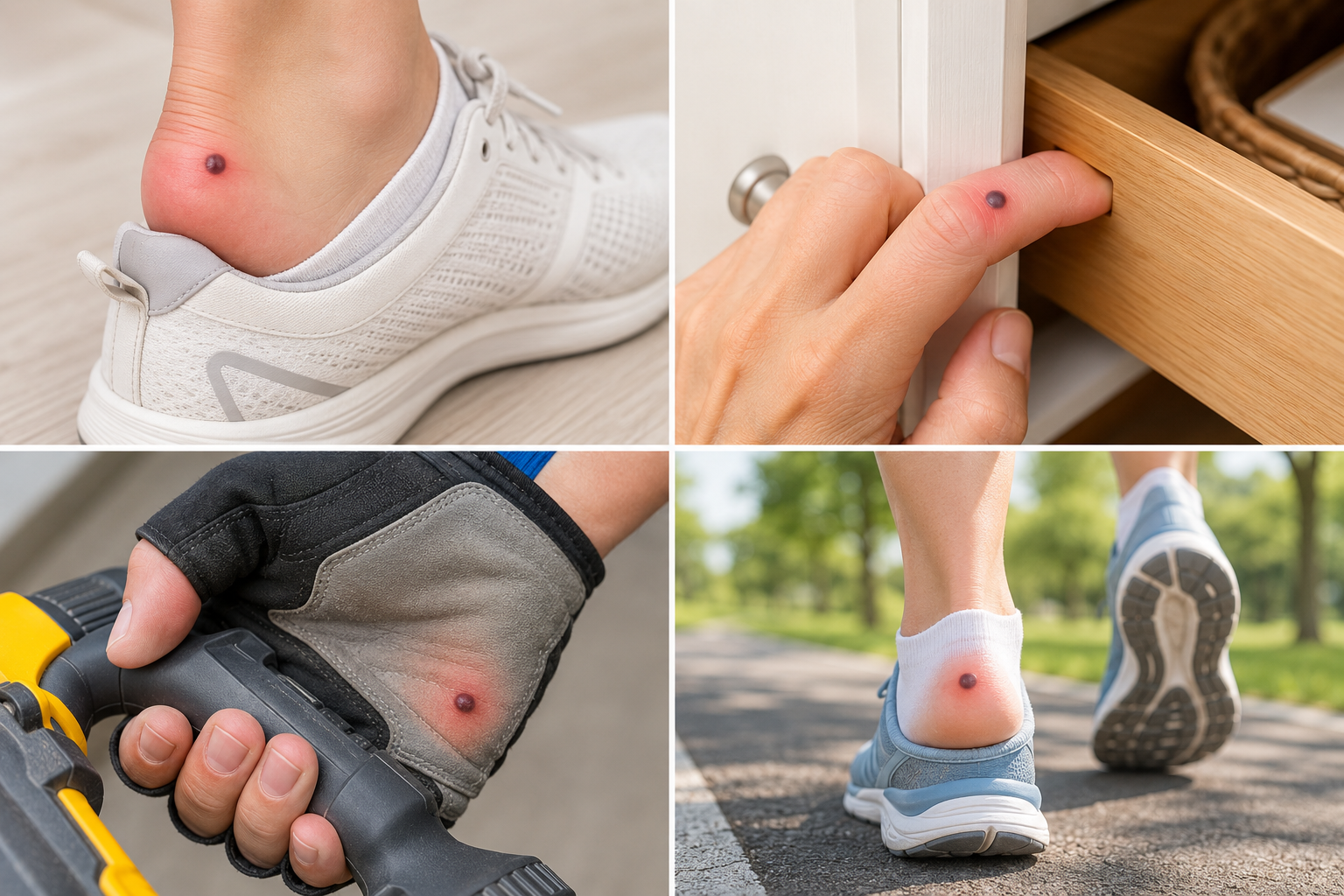
הסיבה השכיחה ביותר היא פגיעה מקומית בעור. כאשר העור נצבט או נתון ללחץ משמעותי, כלי הדם הקטנים שמתחתיו עלולים להיקרע ולמלא את השלפוחית בדם.
גורמים נפוצים לשלפוחית דם
- סגירת דלת או מגירה על האצבע
- מכה באצבע הרגל בשולחן, מדרגה או חפץ קשה
- נעליים לוחצות או נעליים חדשות שמפעילות לחץ על העקב
- פעילות ספורטיבית ממושכת עם חיכוך בכפות הרגליים
- שימוש בכלי עבודה ללא כפפות מתאימות
- שפשוף ולחץ חוזרים על כפות הידיים
In some cases, people taking blood thinners may develop blisters even after a relatively minor injury because their blood clots more slowly. Additionally, people with diabetes or circulation problems should be extra careful with any wounds or blisters on their feet.
Should a blood blister be diagnosed by a doctor?
In most cases, a medical examination is not necessary. When the blister appeared after a familiar blow, pinch, or rub, and looks typical, it can usually be treated at home and the healing monitored.
When you see a doctor, the diagnosis is usually made by looking at the area and discussing the circumstances surrounding the blister. In unusual cases, such as a blister that appears in the mouth, eye, or intimate area, further testing may be needed to rule out an infection or other medical condition.
You should see a doctor if:
- The blister does not improve within about a week.
- It is very painful or interferes with walking and functioning.
- Recurrent blisters appear for no apparent reason
- There are some blisters without known impact or friction.
- The blister appears in the mouth, eye, or genital area.
- You have diabetes or a known blood flow problem.
- Signs of infection appear
Signs of infection include redness that spreads around the blister, local heat, pain that worsens, swelling, yellow or green pus, and sometimes an unpleasant odor. An untreated blister infection can spread to the skin and even the bloodstream.
How long does it take for a blood blister to heal?
In most cases, a small blood blister will heal on its own within about a week , and sometimes within one to two weeks. During this time, the body develops new skin under the blister and gradually absorbs the blood that has accumulated inside it.
The area may appear darker before it fades, and the top layer of skin may dry out and peel after healing. It is important not to pick at the skin over the blister, even if it looks dry, as it continues to protect the new skin underneath.
Treating a blood blister at home: What should you do?
In the case of a small, uninfected blood blister, the best treatment is usually to protect it and allow it to heal on its own .
Simple steps for home care
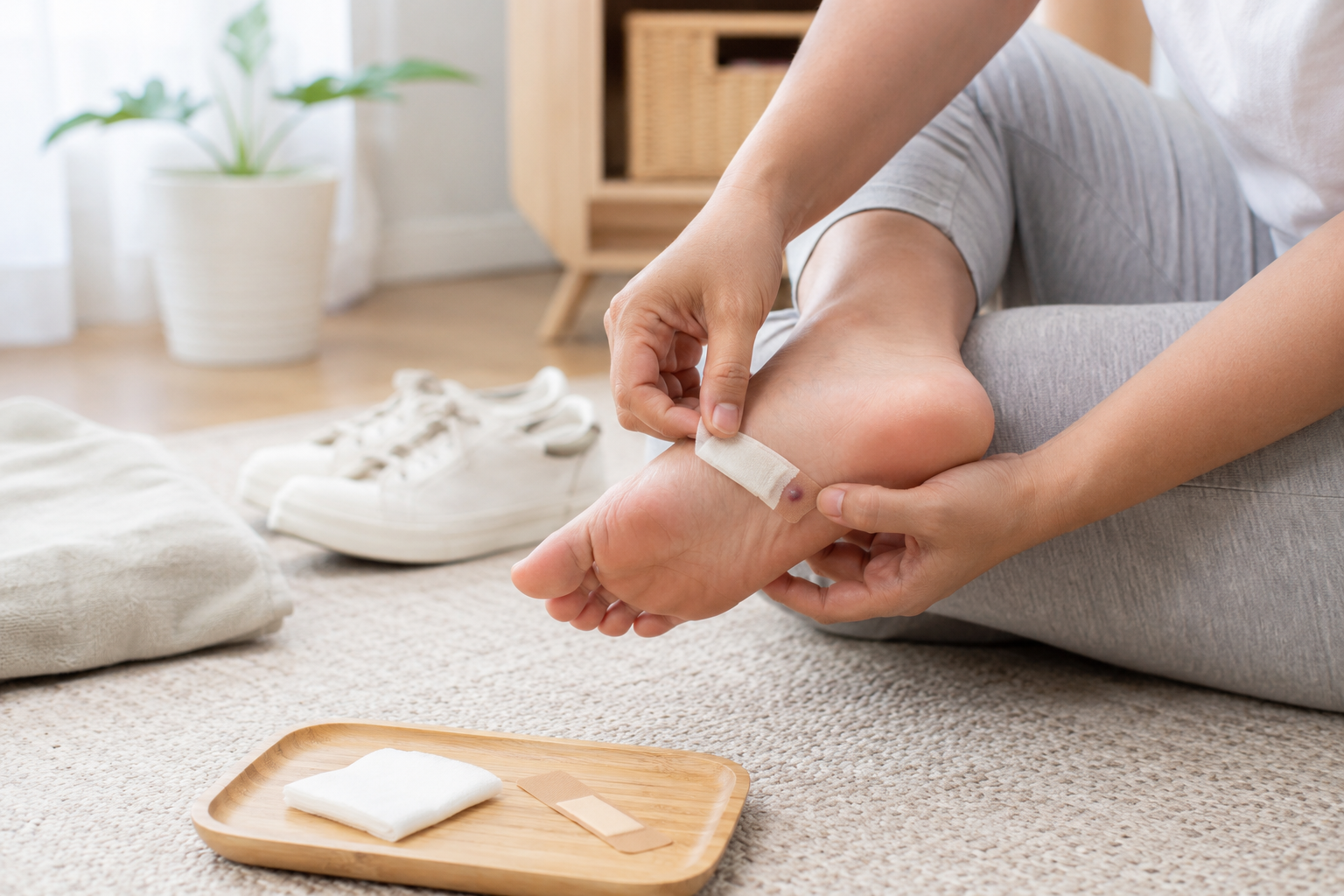
- Gently wash the area with water and mild soap.
- Pat dry lightly , without rubbing.
- Cover the blister with a soft plaster or bandage that doesn’t stick to the wound, especially if the area is exposed to friction.
- Reduce pressure and friction — change tight shoes or avoid the activity that caused the blister.
- Place a cold compress wrapped in a cloth for a few minutes if there is pain or swelling.
- In case of significant pain, you can consult a pharmacist or doctor regarding a suitable painkiller.
For a blister on the heel or foot, it is a good idea to temporarily switch to a wider, more comfortable shoe, and use appropriate padding if there is a constant pressure point. A pharmacy can help you choose a specific dressing for blisters.
What not to do?
- Do not pop the blister yourself.
- Do not peel the top layer of skin.
- Do not poke the area or try to drain it with a household needle.
- Do not continue to wear shoes or use equipment that puts pressure on the bladder.
The closed skin over a blood blister is a natural barrier to bacteria. Opening it unnecessarily can increase the risk of infection and delay healing. In the case of a large or very painful blister, only a medical professional should determine whether safe drainage is necessary.
What to do if the blood blister opens on its own?
Sometimes, despite caution, a blood blister may rupture due to rubbing or pressure. In such a case:
- Wash your hands thoroughly before touching the area.
- Gently clean the area with soap and water.
- Do not remove the remaining skin over the wound.
- Cover with a clean bandage that does not stick to the skin.
- Watch for signs of infection, such as spreading redness, localized heat, pus, or increasing pain.
Once the blister has opened, it is especially important to protect it from dirt and further friction until the skin heals.
How to prevent blood blisters?
Not every injury is preventable, but you can significantly reduce the risk of blood blisters on your hands and feet.
Effective prevention tips
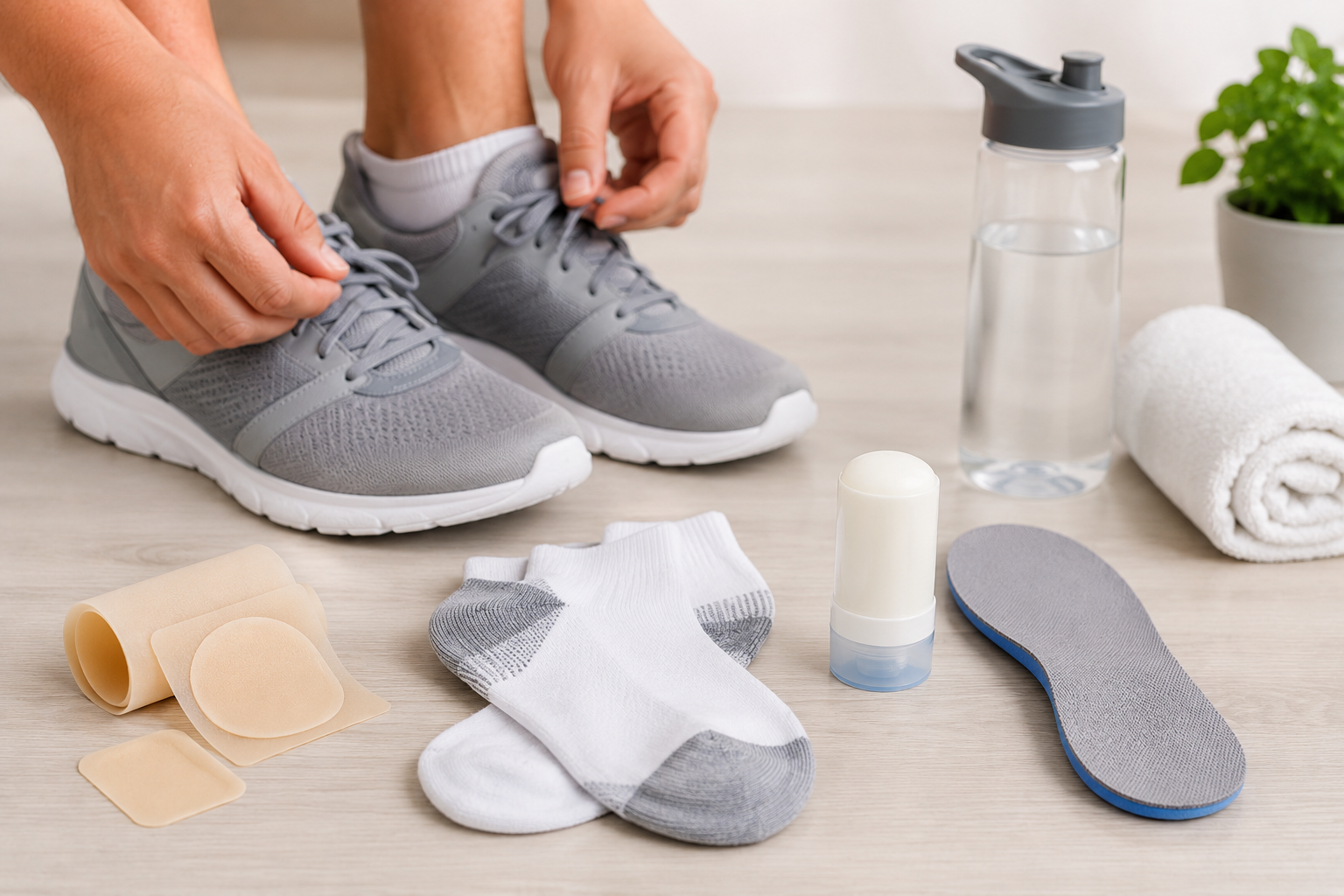
- Wear shoes of the appropriate size that do not press on your toes or heels.
- Wear comfortable socks that reduce moisture and friction while walking or exercising.
- Add padding or protective tape in areas where you feel pressure in the shoe.
- Use work gloves when gardening, making repairs, or carrying heavy objects.
- Be careful when closing doors, drawers, and windows to avoid pinching your fingers.
- Stop activity when you start to feel a burning or pressure sensation in your foot — sometimes this is the stage before a blister appears.
People with diabetes or blood circulation disorders should check their feet regularly and consult a doctor if they notice a blister, wound, or skin change.
Frequently asked questions about blood blisters
Is a blood blister dangerous?
In most cases, no. A blood blister from a minor injury will usually heal on its own. However, infection, significant pain, recurrence, or an unusual location warrant medical attention.
Is it permissible to pop a blood blister?
Not recommended. Opening the blister at home may allow bacteria to enter and cause infection. If it is large or very painful, it is a good idea to see a medical professional.
Why did the blood blister turn black?
The blood inside the blister darkens as it dries and is absorbed by the body. A change from red to dark purple or black can be a natural part of the healing process.
Does a blood blister on the foot require special treatment?
When it is caused by a shoe that is tight or rubbing, it is important to reduce pressure on the area, choose comfortable shoes, and cover the blister. If it is difficult to walk, there are signs of infection, or if you have diabetes, it is recommended to see a doctor.
Health News 2026: Did a blood blister appear on your finger or foot? When is it important to get checked?
A sudden red-purple spot on your finger, heel, or foot may seem alarming—but it’s not always a dangerous condition. A blood blister is usually caused by a pinch, blow, or friction, when small blood vessels under the skin are damaged and blood collects in the blister.
However, not every dark blister is a normal blood blister. Appearance without a clear cause, recurring blisters, worsening pain, or signs of infection may indicate a need for medical evaluation. People with diabetes or blood circulation problems should take special care with foot care.
What should you do immediately when a blood blister appears? Why is it not recommended to pop it at home, how long does recovery take, and what warning signs should you not miss?
In this guide, we will explain how to identify a blood blister, what causes it, how to safely treat it at home, and when it is important to see a doctor.
For more medical information, you can refer to the NHS guidelines on skin blisters .
Important: If redness that spreads, pus, worsening pain, or local fever appear, seek medical attention. In the case of unexplained or recurring blisters, do not assume that they are a normal blood blister without investigation.
In conclusion: It is usually best to protect the bladder and give it time.
A blood blister forms when small blood vessels under the skin are damaged by pinching, pressure, or rubbing. It can appear red, purple, or black, and can sometimes be tender or painful.
In most cases, treatment is simple: keep the area clean, cover it, reduce friction, and don’t pop the blister. If it doesn’t improve, recurs, looks dirty, or appears in an unusual area, it’s important to see a doctor.
Have you noticed a blood blister? Protect the area now, avoid further pressure, and watch for signs of infection over the next few days.