

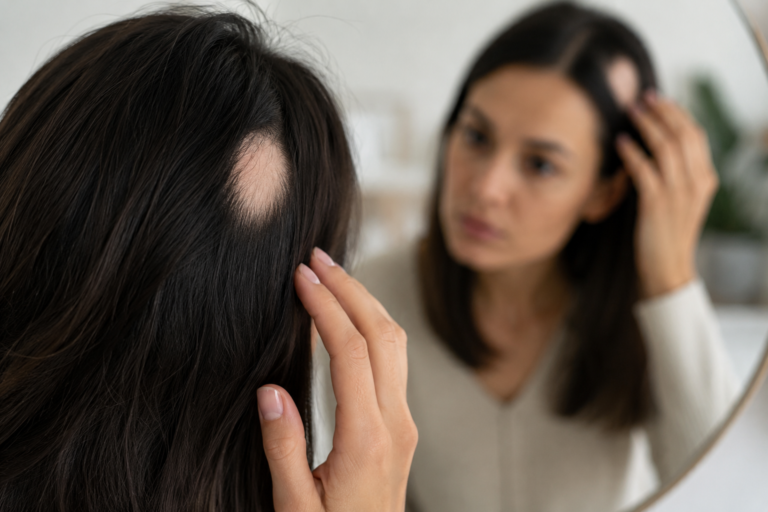
Sudden hair loss can be a stressful and confusing experience — especially when it appears in small patches on the scalp or other areas of the body. One common cause is alopecia areata , a condition in which the immune system mistakenly attacks hair follicles.
Although it is a relatively common phenomenon, many people do not know how to recognize the early signs or understand what treatments are available today. The good news is that in many cases, hair regrowth can be encouraged and the condition can even be managed effectively.
In the following article, you will discover what is alopecia areata, what are the main symptoms, what factors may influence its appearance, and what treatment options currently exist.
What is regional baldness?
Alopecia areata is a disease in which the immune system mistakenly identifies hair follicles as foreign and attacks them, leading to the cessation of hair growth in certain areas.
Unlike other types of baldness, this is hair loss that does not create scars , so in many cases the hair can grow back.
The disease can appear at any age — in childhood, adolescence, or adulthood — and sometimes it develops rapidly within days or weeks.
Common symptoms of alopecia areata
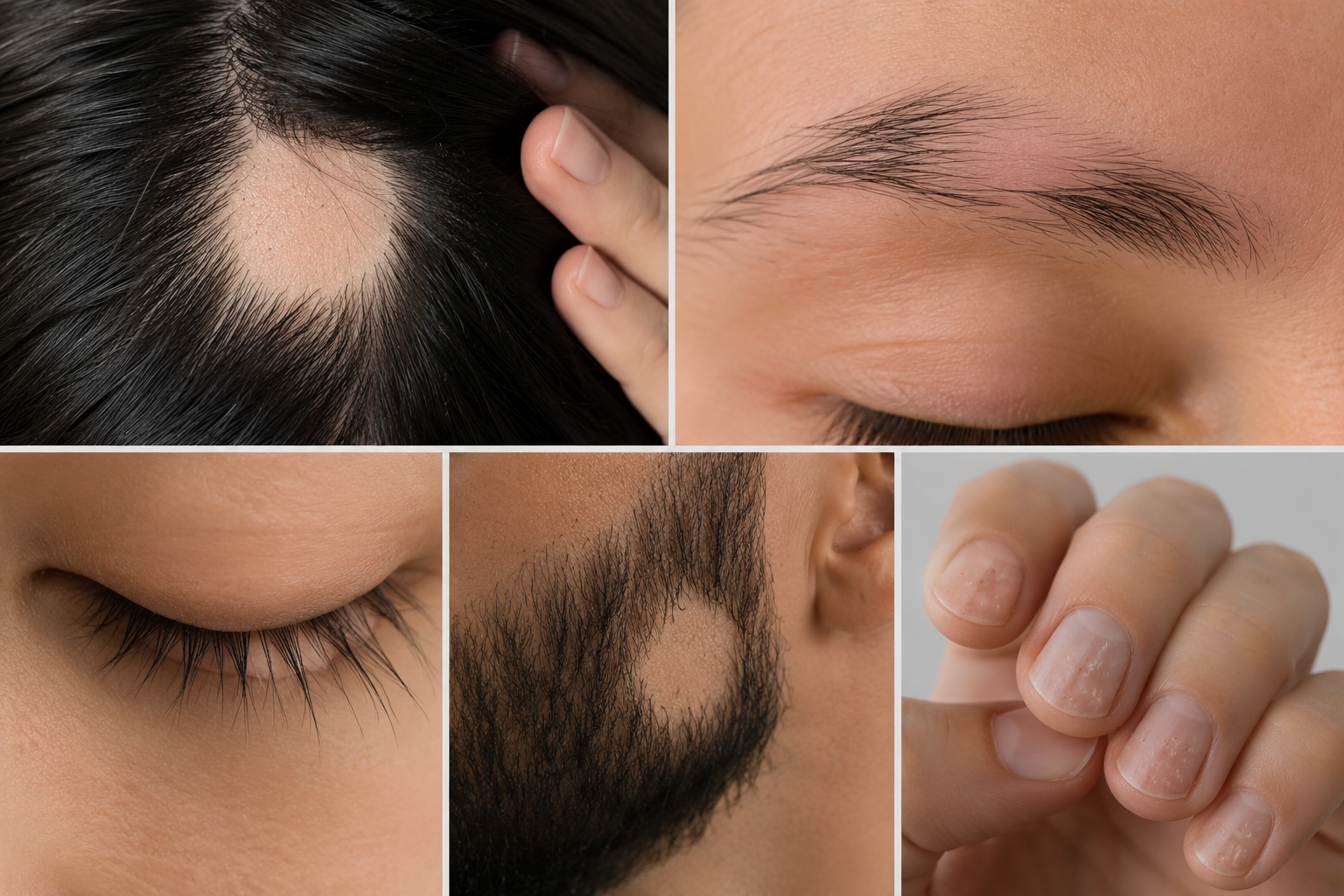
Hair loss in small circles
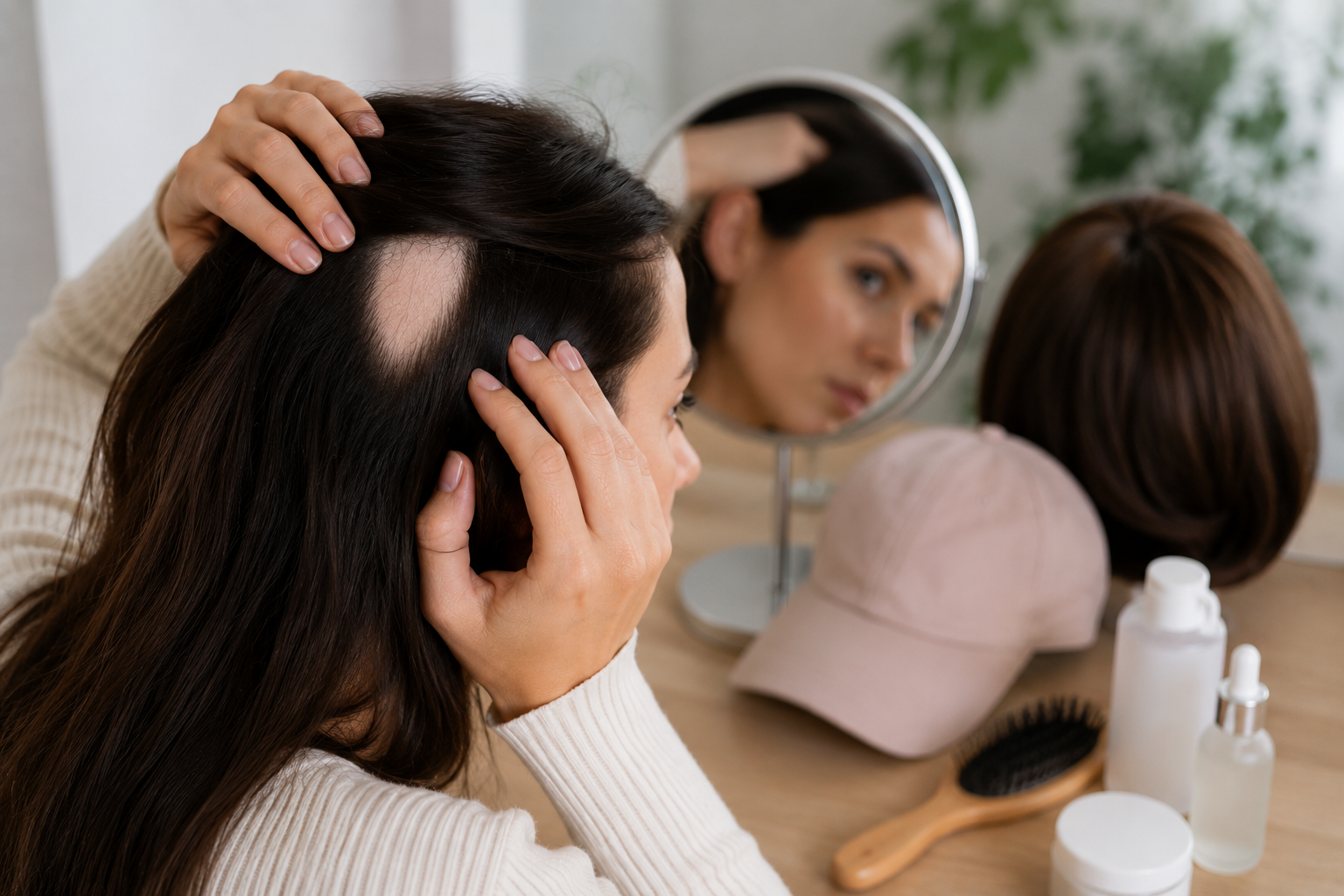
The most obvious sign is the appearance of round or oval bald patches on the scalp. Sometimes it is only a small area, but in other cases the loss can spread.
The most common areas:
- The scalp
- The old man
- Eyebrows
- The eyelashes
- Additional body areas
Tingling or itching sensation
Some people report:
- itching
- burn
- Mild itching
- Scalp sensitivity
Before the dropout begins.
Nail changes
In about 10%–20% of cases, changes in the nails also appear:
- Small indentations in the nail
- Brittle nails
- Rough texture
- Redness
Sometimes these changes indicate a more advanced stage of the disease.
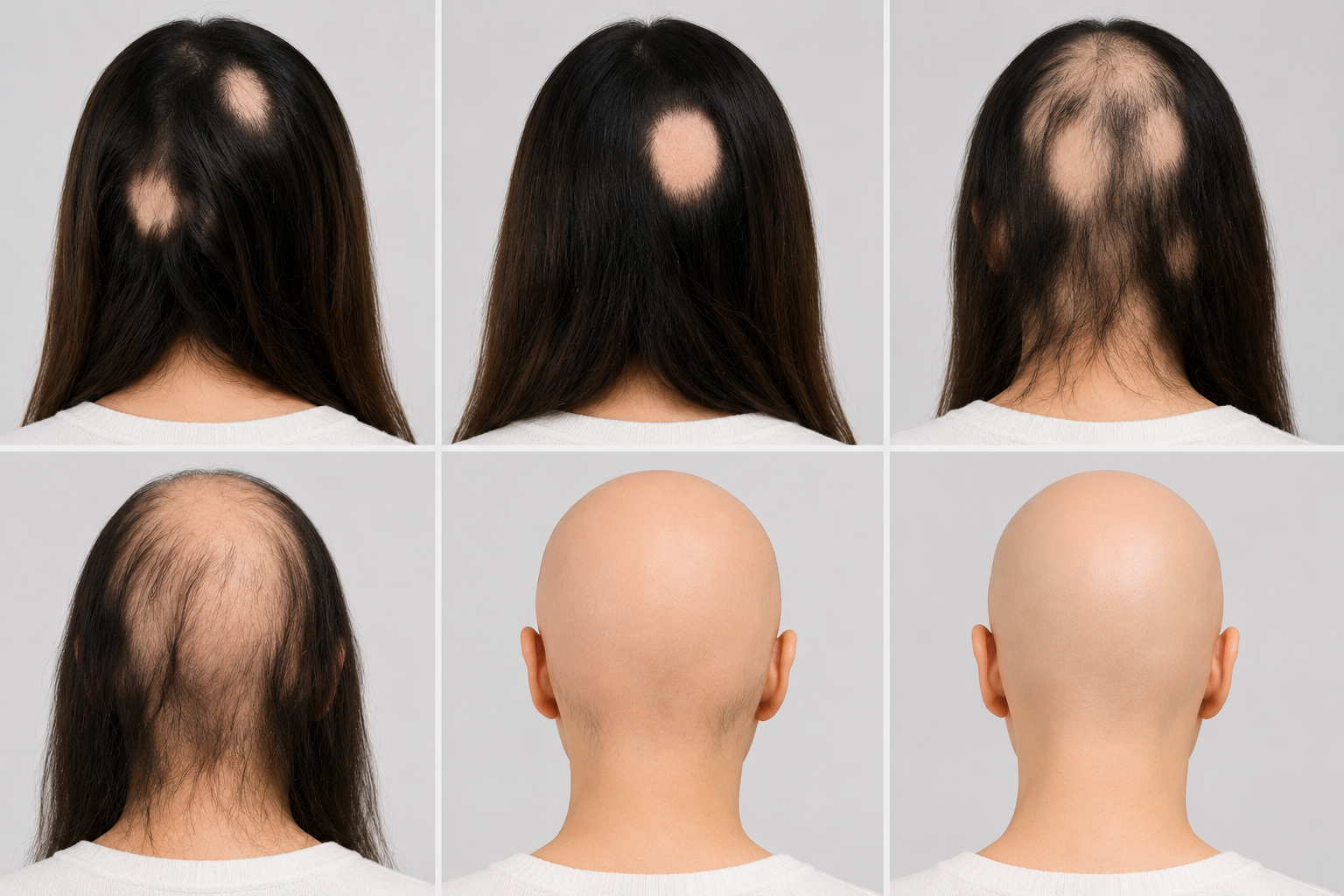
Types of regional baldness
Local regional clearing
The most common form is hair loss in small, focused areas.
Complete baldness on the scalp
A condition in which complete hair loss occurs throughout the scalp.
Hair loss all over the body
The most extensive form, which involves hair loss throughout the body, including eyebrows and eyelashes.
What causes alopecia areata?
The exact cause is still not completely known, but it is known to be an autoimmune disease with a combination of genetic and environmental factors.
Possible risk factors
Family background
If there are family members with alopecia areata or other autoimmune diseases, the risk increases.
Other autoimmune diseases
People with the following conditions are at higher risk:
- Thyroid diseases
- Type 1 diabetes
- Lupus
- Psoriasis
- Vitiligo
- Rheumatoid arthritis
Stress and mental pressure
Although stress is not considered a proven direct cause, many report the onset of the disease after periods of significant stress.
Young age
When the disease begins in childhood or adolescence, it may be more prolonged or aggressive.
How is baldness diagnosed?
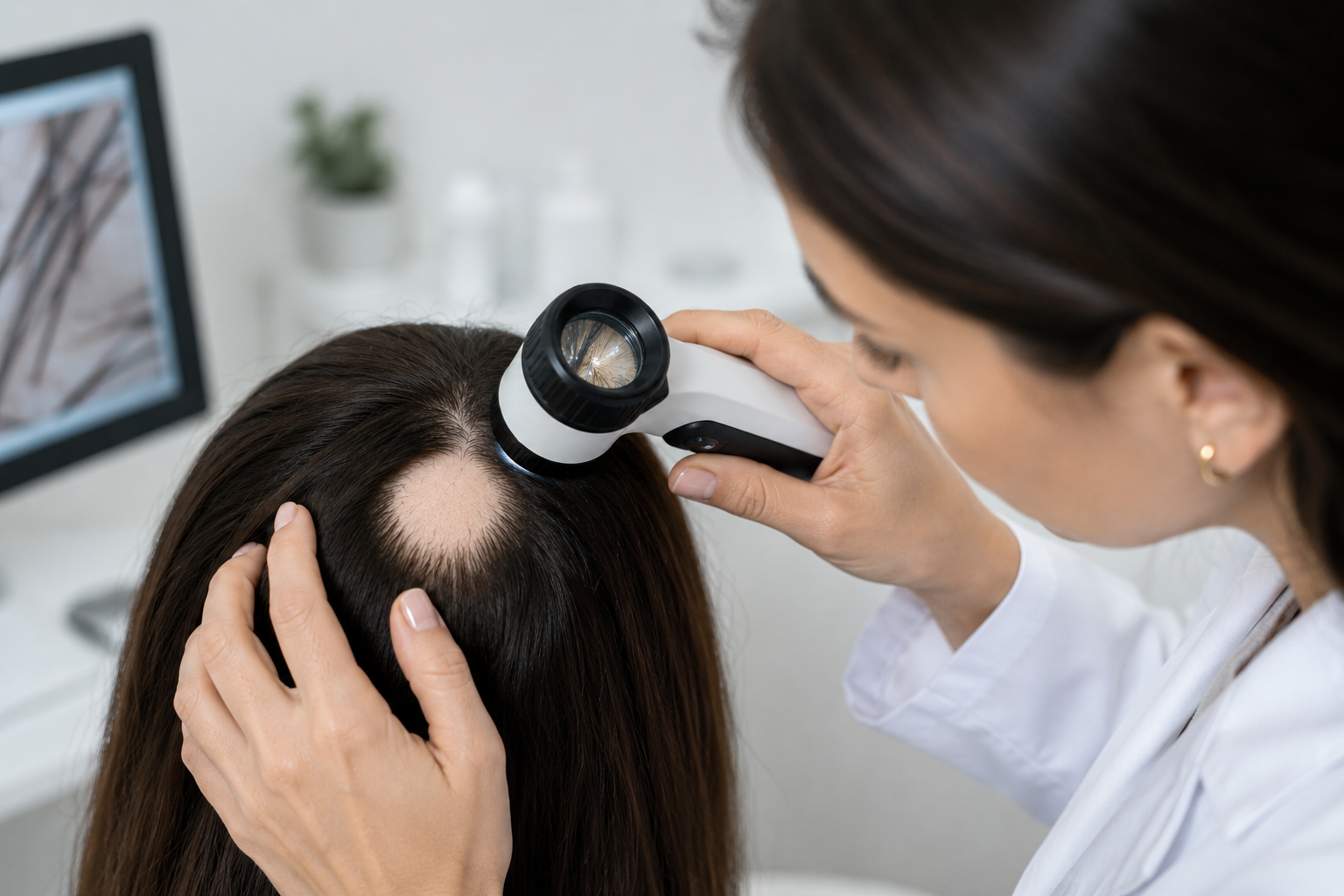
Diagnosis is usually made by a dermatologist through a clinical examination.
During the diagnosis, the doctor may:
- Check the scalp and areas of hair loss.
- Examine the condition of the nails
- Perform blood tests to rule out other autoimmune diseases
- Take a small skin sample (biopsy) if necessary
- Examine hairs under a microscope
Early diagnosis is important to tailor appropriate treatment and rule out other causes of hair loss.
Can hair grow back?
In many cases, yes.
For some people, hair grows back within a few months even without treatment. However, the disease is considered unpredictable, and sometimes the hair loss returns in waves.
Some people experience:
- One-time event only
- Alternating periods of growth and shedding
- Prolonged chronic condition
The younger the age at which the disease appears or the more extensive it is, the higher the chance of recurrence may be.
Existing treatments for alopecia areata
Treatment is tailored to the severity of the condition and the extent of hair loss.
Steroids
One of the most common treatments.
They can be obtained as:
- Scalp injections
- Ointments or solutions
- Pills in some cases
The goal is to reduce immune system activity in the area.
Minoxidil
This is a product that encourages hair growth and may be especially helpful when combined with other treatments.
Important to know: It usually takes at least 3 months to start seeing results.
Advanced drugs for the immune system
In recent years, innovative drugs have been approved that are considered a breakthrough in the treatment of severe cases of alopecia areata.
The medications act on the immune system and may help in cases of extensive hair loss.
Complementary therapies and psychological support
Along with medical treatment, many find relief through:
- Support groups
- Emotional care
- Stress reduction
- Use of wigs, hats, or head coverings
Practical tips for dealing with regional baldness
Maintain a balanced diet
A healthy diet helps with overall health and maintaining healthy hair.
It is recommended to combine:
- High-quality protein
- iron
- zinc
- B vitamins
Avoid extreme diets.
Sudden weight loss can worsen hair loss.
Protect your scalp from the sun
In hairless areas, the scalp is more sensitive to UV radiation.
Use:
- hat
- Sunscreen
- Headwear
Reduce stress
You can try:
- Physical activity
- meditation
- yoga
- Breathing exercises
The psychological impact of regional baldness
Beyond the external change, regional baldness may also have a significant impact on self-confidence and emotional state.
Many people struggle with:
- anxiety
- Low body image
- Peer pressure
- Decreased self-confidence
It’s important to remember that you are not alone. Today, there are many support communities, accessible professional information, and advanced treatments that can help.
When should you see a doctor?
It is recommended to consult a dermatologist if you notice:
- Sudden hair loss
- Round bald spots on the scalp
- Eyebrow or eyelash loss
- Nail changes
- Rapid worsening of hair loss
Early diagnosis may improve the chances of treatment and coping.
Summary
Alopecia areata is a relatively common but still not fully understood phenomenon. It can appear suddenly and cause hair loss in various areas of the body, but in many cases, hair regrowth can be seen.
Today, there are a variety of treatments available — from steroids to innovative medications — alongside practical tools for daily coping and improving quality of life.
If you are experiencing unusual hair loss, don’t ignore the signs. Early consultation with a dermatologist can make a significant difference.
Start paying attention to the signs today, and don’t hesitate to seek professional advice if necessary.