


The truth is, there is no one-size-fits-all number. The amount of calories each person burns each day depends on their age, weight, height, muscle mass, level of physical activity, and personal goals.
In this guide, we’ll explain how the body burns calories, how to calculate your personal needs, how many calories you should burn to lose weight, and what simple changes can help you increase calorie burning in a safe and healthy way.
What affects the amount of calories the body burns?
The body burns calories throughout the day – even while resting. In fact, most of the daily energy is not burned in fitness training but in basic processes that allow the body to function.
Among the factors that affect calorie burning:
- age.
- sex.
- Height and weight.
- Muscle mass.
- Daily activity level.
- Type of work.
- Dietary habits.
The higher the muscle mass, the more energy the body consumes even at rest.
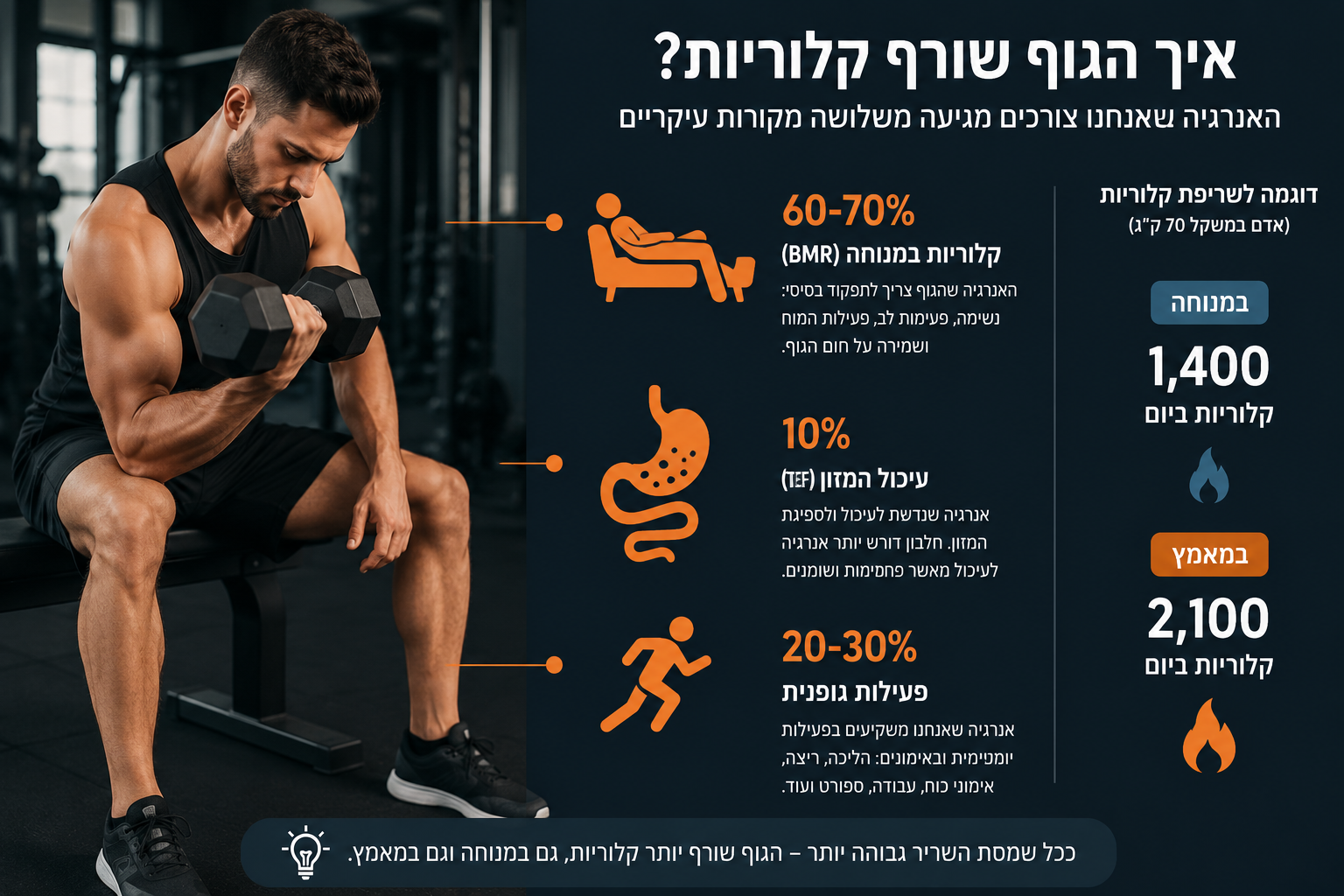
What is basal metabolic rate (BMR)?
BMR (Basal Metabolic Rate) is the number of calories the body burns at complete rest for essential functions only, such as:
- breathing.
- Heart activity.
- Brain activity.
- Maintaining body heat.
- Functioning of internal organs.
For most people, about 60%–70% of total daily calories are burned as part of basal metabolism .
As you age, your metabolic rate tends to decrease, mainly due to a natural decrease in muscle mass.
What is TDEE and why is it important?
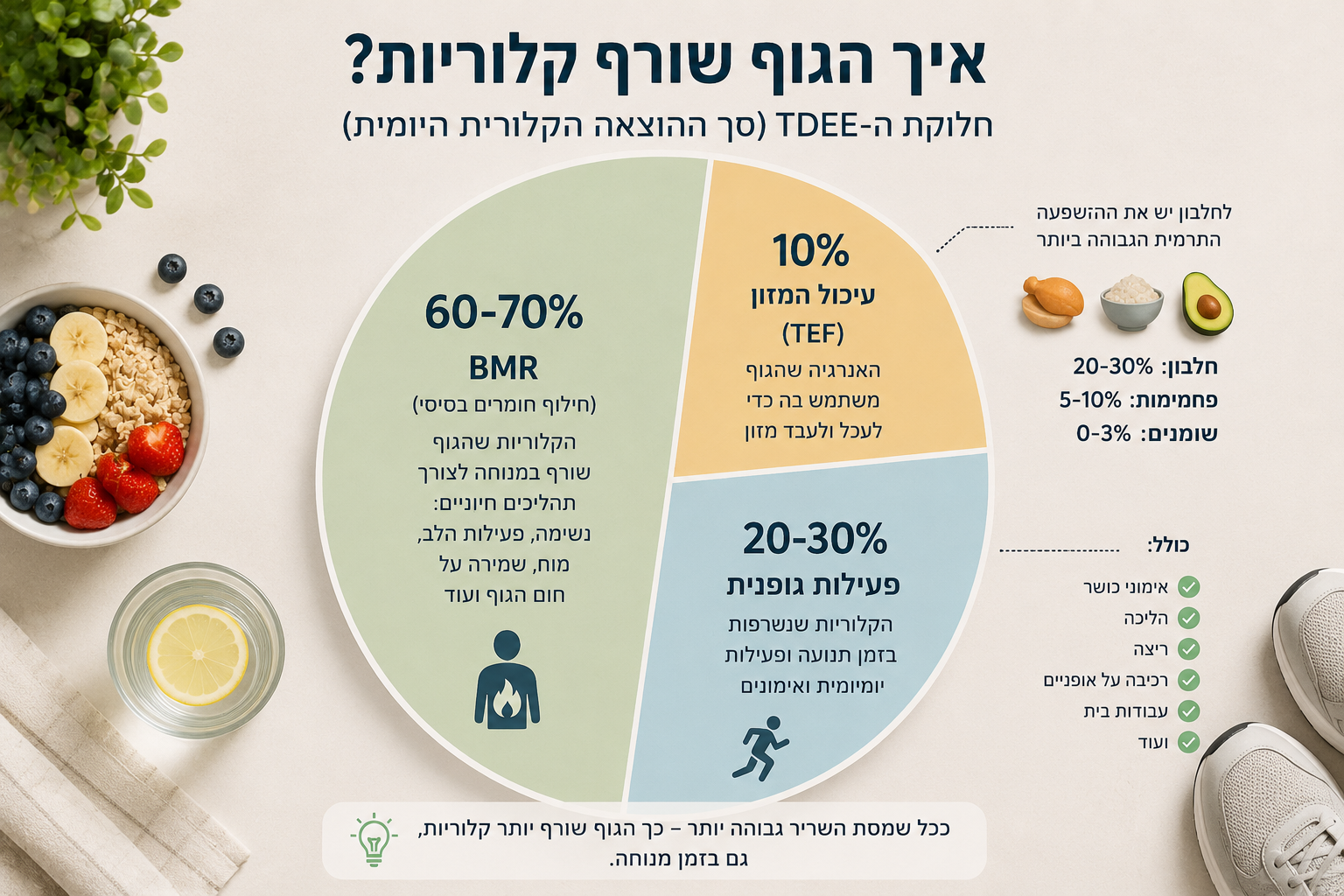
One of the most important terms in the world of nutrition is TDEE (Total Daily Energy Expenditure) – the total calories the body burns throughout the day.
The TDEE consists of several components:
BMR – Basal Metabolic Rate
The energy needed for the body to function at rest.
Thermic Effect of Food
The digestive process also requires energy.
In fact, the body burns calories while it:
- Food processor.
- Absorbs nutrients.
- Processes proteins, carbohydrates and fats.
Protein has the highest thermic effect, so a diet high in protein may slightly increase calorie burning.
Physical activity
Every activity contributes to burning calories:
- walk.
- running.
- Cycling.
- Swimming.
- Strength training.
- Ball games.
- Housework.
How do you calculate how many calories you need to burn per day?
There is no one-size-fits-all formula, but professional calorie calculators use data like:
- age.
- sex.
- height.
- weight.
- Daily activity level.
The result is an estimate of the number of calories the body burns in a typical day.
Once you know your daily intake, you can adjust your menu and personal goals.
Weight loss occurs when the body is in a calorie deficit .
i.e:
Burn more calories than you take in through food.
In most cases, it is recommended to create a moderate deficit using a combination of:
- Slight reduction in calorie intake.
- Increasing physical activity.
A gradual approach is considered safer and helps maintain muscle mass and reduce the risk of weight regain.
And if the goal is to gain weight or build muscle?
In such a case, a controlled calorie surplus is required , meaning consuming slightly more calories than the body burns.
However, so that the increase is mainly in muscle mass and not fat, it is recommended:
- Ensure adequate protein intake.
- Do resistance training.
- Sleep well.
- Maintain a quality menu.
How many calories do you burn per day in different activities?
The amount of calories varies depending on body weight, the intensity of the activity and its duration.
In general:
| activity | Estimated calorie burn in 30 minutes |
|---|---|
| Fast walking | 120–170 |
| jogging | 250–350 |
| Cycling | 180–300 |
| Swimming | 220–320 |
| Aerobics | 200–300 |
| Dance | 150–250 |
| Strength training | 100–250 |
| Strenuous garden work | 180–280 |
The values vary from person to person and are used as an estimate only.

Does a smartwatch really measure calorie burn?
Smartwatches and fitness trackers can provide a general assessment of:
- Several steps.
- pulse.
- Activity time.
However, the calorie calculation they display is not always accurate.
Therefore, it is recommended to view them as a tool for tracking trends and not as a precise medical measurement.
Effective tips to burn more calories
You don’t have to spend hours in the gym to increase your energy expenditure.
You can start with simple habits:
Increase the number of steps
- Go up the stairs.
- We parked further away.
- Go for a walk after dinner.
Incorporate strength training
Building muscle mass helps increase your metabolic rate even while at rest.
Eat enough protein
Make sure you get quality sleep.
חוסר שינה עלול להשפיע על תחושת הרעב, חילוף החומרים והיכולת לבצע פעילות גופנית. אם אתם רוצים לדעת כמה קלוריות צריך לשרוף ביום, חשוב לזכור ששינה איכותית תומכת בחילוף חומרים תקין ובשריפת קלוריות יעילה יותר.
Be active throughout the day
טעויות נפוצות שכדאי להימנע מהן בעת חישוב כמה קלוריות צריך לשרוף ביום
- Doing too extreme workouts.
- Sharply reducing calories.
- Complete reliance on apps or smartwatches.
- Focusing only on calories instead of nutritional quality.
- Skipping meals over time.
A balanced approach is usually more effective over time.
שאלות נפוצות (FAQs)
1. כמה קלוריות צריך לשרוף ביום כדי לרדת במשקל?
אין מספר קבוע שמתאים לכולם. כמות הקלוריות שצריך לשרוף ביום תלויה בגיל, במשקל, בגובה, ברמת הפעילות ובמטרת הירידה במשקל. לרוב, מומלץ ליצור גירעון קלורי מתון באמצעות שילוב של תזונה מאוזנת ופעילות גופנית.
2. האם שריפת 500 קלוריות ביום מספיקה לירידה במשקל?
עבור אנשים רבים, שריפת 500 קלוריות ביום בשילוב גירעון קלורי יכולה לתמוך בירידה הדרגתית במשקל. עם זאת, התוצאה משתנה בהתאם לצריכת הקלוריות היומית ולמאפיינים האישיים.
3. איך מחשבים כמה קלוריות צריך לשרוף ביום?
ניתן לחשב זאת באמצעות נתונים כמו גיל, מין, גובה, משקל ורמת הפעילות היומית. מחשבוני BMR ו-TDEE מספקים הערכה טובה של מספר הקלוריות שהגוף שורף בכל יום.
4. מה ההבדל בין BMR ל-TDEE?
BMR הוא מספר הקלוריות שהגוף שורף במנוחה כדי לשמור על תפקודים חיוניים, בעוד TDEE הוא סך כל הקלוריות שהגוף שורף במשך היום, כולל פעילות גופנית, עיכול ופעילויות יומיומיות.
5. האם אימוני כוח עוזרים לשרוף יותר קלוריות?
כן. אימוני כוח מסייעים בבניית מסת שריר, ושרירים שורפים יותר קלוריות גם בזמן מנוחה. לכן, שילוב אימוני כוח יכול להגדיל את שריפת הקלוריות היומית.
6. אילו פעילויות שורפות הכי הרבה קלוריות?
ריצה, שחייה, רכיבה על אופניים, אימוני אינטרוולים (HIIT) ואימוני כוח בעצימות גבוהה נחשבים לפעילויות היעילות ביותר לשריפת קלוריות. מספר הקלוריות שנשרפות תלוי במשך הפעילות ובעצימותה.
7. האם שעון חכם מודד במדויק את שריפת הקלוריות?
לא תמיד. שעונים חכמים מספקים הערכה בלבד המבוססת על דופק, צעדים ורמת פעילות. מומלץ להשתמש בהם למעקב אחר מגמות ולא כמדידה רפואית מדויקת.
8. האם אכילת יותר חלבון עוזרת לשרוף יותר קלוריות?
כן. לחלבון יש אפקט תרמי גבוה יותר מפחמימות ושומנים, ולכן הגוף משתמש ביותר אנרגיה כדי לעכל אותו. בנוסף, חלבון מסייע לשמור על תחושת שובע ולתמוך בשמירה על מסת השריר.
9. האם אפשר לשרוף יותר קלוריות בלי ללכת לחדר כושר?
בהחלט. הליכה, עלייה במדרגות, ניקיון הבית, עבודות גינה, עמידה ממושכת ומשחק עם הילדים יכולים להגדיל את שריפת הקלוריות לאורך היום.
10. מהן הטעויות הנפוצות ביותר כשמנסים לשרוף יותר קלוריות?
טעויות נפוצות כוללות אימונים קיצוניים מדי, הפחתה חדה בצריכת הקלוריות, דילוג על ארוחות, הסתמכות מלאה על שעונים חכמים ואפליקציות, והתמקדות רק במספר הקלוריות במקום בתזונה איכותית ובאורח חיים בריא.
Summary
There is no magic number of calories that every person should burn each day. The amount varies depending on age, body type, activity level, and personal goals.
If the goal is weight loss, it is important to create a moderate calorie deficit while combining exercise and a balanced diet. If the goal is to build muscle, you should maintain a controlled calorie surplus, high-quality protein, and strength training.
Remember that success depends not only on the amount of calories burned, but also on the quality of food, perseverance, and healthy lifestyle habits.
Start with small steps today – every positive change can bring you closer to your health goal.