

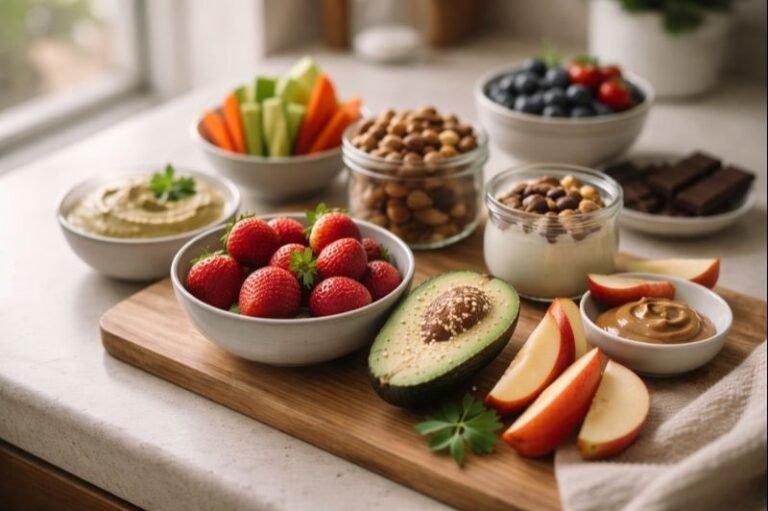
13 Healthy and Delicious Snacks to Replace Processed Snacks
Many of us think that healthy food must be tasteless, boring, or complicated to prepare. But the truth is that you can enjoy a wide variety of delicious, nutritious, and satisfying foods that can also be easily incorporated into your daily menu.
If you tend to snack between meals, are looking for a way to reduce your intake of processed snacks, or want to improve your nutritional habits, it’s worth getting to know some simpler, healthier alternatives.
Healthy snacks can provide the body with dietary fiber, protein, vitamins, minerals, and unsaturated fats. The right combination of them in the menu can help to feel full, support heart health, and improve the quality of your overall diet.
New research published in 2025–2026 reinforces the importance of choosing quality snacks. In a clinical study published in The American Journal of Clinical Nutrition in 2025, replacing regular snacks with pecans for 12 weeks improved certain measures of cholesterol and dietary quality in participants with metabolic risk factors. Another study found that replacing high-carb snacks with a nut mix may reduce cravings for sweet foods and improve dietary quality.
PubMed+1
In the following guide, we will introduce 13 healthy and delicious snacks, learn about their nutritional benefits, and get simple ideas for incorporating them into your daily menu.
1. Strawberries – a sweet fruit rich in vitamin C
Strawberries are one of the most delicious and refreshing fruits, and they can be an excellent substitute for sweets and high-sugar snacks.
They contain vitamin C, manganese, folate, potassium, and dietary fiber. They are also rich in plant compounds like anthocyanins, which give them their red color and act as antioxidants.
A cup of chopped strawberries, weighing about 150 grams, contains about 50 calories and about 3 grams of dietary fiber.
The nutritional benefits of strawberries:
-
Contributes to vitamin C intake.
-
Provide natural antioxidants.
-
Contains fiber that supports digestive system activity.
-
Can be incorporated into a balanced menu to maintain heart health.
How should you eat them?
You can eat strawberries fresh, add them to natural yogurt, or make a fruit smoothie with them. For those who like a particularly sweet combination, you can dip some of the strawberries in dark chocolate.
2. Blueberries – a natural source of fiber and antioxidants
Blueberries are small berries that contain a variety of important nutrients. Their blue-purple color comes primarily from anthocyanin compounds, which are being studied for their antioxidant activity.
A cup of fresh blueberries contains about 85 calories and about 3.5–4 grams of dietary fiber.
Nutritional studies are examining the relationship between blueberry consumption and heart health, vascular function, and processes related to brain health. However, eating blueberries should not be considered a proven treatment or prevention of disease.
Why should you include blueberries in your menu?
-
They provide antioxidants.
-
They contain dietary fiber.
-
They provide vitamin C and vitamin K.
-
They are suitable for snacking between meals.
Tip: Add a handful of blueberries to plain yogurt, oatmeal, or a smoothie. You can also freeze them and enjoy a cool snack in the summer.
3. Dark Chocolate – A Delicious Way to Enjoy Cocoa
Dark chocolate, especially one containing 70%–85% cocoa, can be incorporated into a balanced diet in moderate amounts.
Cocoa contains flavanols, which are plant compounds that are being studied for their possible effects on blood vessel function and heart health. Dark chocolate also contains magnesium, iron, and copper.
However, it’s important to remember that dark chocolate still contains calories, fat, and sometimes added sugar.
Possible benefits:
-
Contains antioxidant compounds.
-
Provides minerals such as magnesium and iron.
-
Can be an alternative to certain sweets.
-
Allows you to enjoy a sweet, concentrated taste in a small amount.
How to enjoy it?
Choose a cube or two of dark chocolate to accompany your coffee or tea. You can also combine small pieces with strawberries, almonds, or nuts.
4. Almonds – a crunchy snack rich in unsaturated fats
Almonds are one of the most nutritious and convenient snacks you can take to work, school, or on the go.
They contain monounsaturated fats, protein, dietary fiber, vitamin E, magnesium, and manganese.
A clinical study published in 2025 in the journal Nutrition Research examined almond snacking in adults with metabolic syndrome. The findings indicated improvements in certain measures of LDL cholesterol, total cholesterol, and measures related to gut inflammation.
ScienceDirect
Benefits of almonds:
-
Contributes to a feeling of satiety.
-
Provide unsaturated fats.
-
Rich in vitamin E.
-
Contains protein and dietary fiber.
Tip: A serving of about 28 grams, about a small handful, is a convenient snack option. You can combine almonds with dates or fresh fruit.
For more information, also read our guide on protein-rich foods you should add to your menu .
5. Pistachios – a snack rich in protein and fiber
Pistachios are nuts with a unique flavor and crunchy texture. They provide plant-based protein, dietary fiber, potassium, vitamin B6, and antioxidant compounds.
Their advantage is the combination of unsaturated fats, protein, and fiber, which may help you feel full.
Why should you eat pistachios?
-
Provide plant protein.
-
Contains dietary fiber.
-
Provide potassium and vitamin B6.
-
Can replace processed salty snacks.
How much is recommended to eat?
A serving of about 28 grams of shelled pistachios is a reasonable amount for a snack. It is best to choose pistachios without added salt or with a low amount of salt.
6. Cherries – a sweet fruit with plant compounds
Cherries are sweet fruits that contain vitamin C, potassium, dietary fiber, and various plant compounds, including anthocyanins.
These compounds are being studied for their antioxidant activity and their possible effect on inflammatory processes in the body.
Cherries can be incorporated as part of a varied diet and provide a delicious alternative to sweets.
Their nutritional benefits:
-
Contains vitamin C.
-
Provide dietary fiber.
-
Contains antioxidant plant compounds.
-
Can be incorporated into a light snack.
Tip: Eat fresh or frozen cherries without added sugar. You can add them to yogurt or fruit salad.
7. Mango – a tropical fruit rich in vitamins
Mango is a sweet and juicy tropical fruit that provides vitamin C, beta-carotene, folate, and dietary fiber.
Beta-carotene is a substance that the body can convert into vitamin A, which is important for, among other things, eye health and the proper functioning of the immune system.
What makes mango a good snack?
-
Contains vitamin C.
-
Provides beta-carotene.
-
Contains dietary fiber.
-
Can add natural sweetness to foods.
How to combine mango?
Cut mango into cubes and add it to plain yogurt, oatmeal, or a smoothie. You can also freeze mango cubes and use them as a refreshing snack.
8. Avocado – a source of healthy fats and fiber
Avocado is a fruit with a creamy texture and delicate flavor, containing mainly monounsaturated fats.
In addition, it provides dietary fiber, potassium, folate, and vitamins E, K, and C.
Including avocado in your diet may help improve the quality of fats in your diet, especially when it replaces foods that contain high amounts of saturated fat.
Benefits of avocado:
-
Provides unsaturated fats.
-
Contains dietary fiber.
-
Provides potassium.
-
Can be incorporated into satisfying meals.
Recommendation: Spread avocado on a slice of wholemeal bread, add it to a salad, or make a spread with lemon, garlic, and a little salt.
9. Homemade popcorn – a whole grain snack
Popcorn is one of the more surprising snacks on the list. When prepared without large amounts of butter, oil, and salt, it can be a good snack option.
Popcorn is made from whole corn and contains dietary fiber that helps the digestive system function properly.
Why choose homemade popcorn?
-
Contains whole grains.
-
Provides dietary fiber.
-
Allows you to enjoy a crunchy snack.
-
You can control the amount of oil and salt.
How to make healthy popcorn?
Pop the popcorn in a pot with a little oil or in a hot air popcorn maker. Season with cinnamon, paprika, or a small amount of salt.
It is important to distinguish between homemade popcorn and commercial popcorn, which contains large amounts of butter, salt, and additives.
10. Sweet potatoes – an excellent source of beta-carotene and fiber
Sweet potatoes are delicious root vegetables, rich in complex carbohydrates, dietary fiber, and beta-carotene.
They also provide potassium and vitamin C, and can be a satisfying substitute for fried snacks.
The nutritional benefits of sweet potatoes:
-
Provide beta-carotene.
-
Contains dietary fiber.
-
Provide potassium.
-
Can be integrated into a varied and balanced menu.
Preparation tip: Cut a sweet potato into strips, add a little olive oil, paprika and garlic, and bake in the oven until it softens and browns.
This way you can enjoy a hot and delicious snack without the need for deep frying.
11. Hummus – a satisfying combination of protein and fiber
Chickpeas provide plant-based protein, fiber, folate, iron, and magnesium. Grinding adds unsaturated fats and minerals.
This combination makes hummus a good option for a snack, especially when eaten alongside fresh vegetables.
How to enjoy hummus in a healthy way?
-
Combine it with chopped cucumber and carrots.
-
Spread it on wholemeal bread.
-
Add it to a sandwich with vegetables.
-
Make hummus at home with a moderate amount of oil and salt.
You can also occasionally replace processed salty snacks with baked and seasoned chickpeas.
12. Natural yogurt – protein and calcium in every serving
Natural yogurt is a fermented milk product that can provide high-quality protein, calcium, and B vitamins.
Greek yogurt typically contains more protein than regular yogurt, so it can be a particularly satisfying choice.
Some yogurt products also contain live bacterial cultures, depending on the type of product and the manufacturing process.
The benefits of natural yogurt:
-
Provides quality protein.
-
Contains calcium, which is important for bone health.
-
May contain live bacterial cultures.
-
Suitable for combination with fruits, nuts and seeds.
Recommendation: Choose natural yogurt with no added sugar. Add blueberries, strawberries, almonds, or a little oatmeal for a varied snack.
13. Peanut butter and watermelon – two delicious snack options
These two foods offer a different snacking experience, but each can be incorporated into a balanced diet.
Peanut butter
Peanut butter contains plant protein, unsaturated fats, magnesium, and vitamin E. It can be a satisfying snack when consumed in moderation.
Choose natural peanut butter that contains mostly peanuts, without significant added sugar or salt.
How to eat it?
-
Spread a small amount on apple slices.
-
Add a chopped banana.
-
Combine it with a slice of wholemeal bread.
-
Add a little of it to a smoothie.
A serving of about two tablespoons usually contains about 180–200 calories, so it’s worth paying attention to the amount.
watermelon
Watermelon is a refreshing fruit that contains a high amount of water, vitamin C, potassium, and a plant compound called lycopene.
It can provide a light and refreshing snack, especially on hot days.
Why should you include watermelon?
-
Contains a high amount of water.
-
Provides vitamin C.
-
Contains lycopene.
-
Can be incorporated as a sweet and natural snack.
Cut watermelon into cubes and store in the refrigerator. You can combine it with yogurt or enjoy it on its own.
What do the new studies of 2025–2026 say about healthy snacks?
Nutrition research continues to examine how snack choices affect diet quality, feelings of satiety, and indicators related to metabolic health.
Three interesting findings deserve attention:
1. Replacing regular snacks with pecans
A 2025 clinical study included 138 adults with metabolic risk factors. Participants in the intervention group replaced their regular snacks with about 57 grams of pecans per day for 12 weeks. The researchers found improvements in several blood lipid measures and a diet quality score, but no significant improvements in any measures of vascular health.
PubMed+1
2. Nuts may reduce cravings for sweets
A randomized trial published in December 2025 in the journal Nutrients involved 84 young adults with risk factors for metabolic syndrome. Replacing high-carb snacks with nuts for 16 weeks was associated with reduced cravings for sweet foods and a 19% improvement in diet quality scores in the nut group. This is a relatively small study, so more research is needed.
PubMed+1
3. The quality of the snack is more important than the snack itself
Recommendations from the Harvard School of Public Health emphasize choosing foods that contain fiber, protein, and whole grains, such as nuts, yogurt, and popcorn. Such a combination can help with satiety and better dietary choices.
The Nutrition Source
The main message is that you don’t need to stop snacking. It’s better to choose higher-quality foods and make sure to eat quantities that suit your personal needs.
How to choose healthy snacks that will keep you full for a long time?
Not every food that is considered healthy will necessarily be equally satisfying. To create a balanced snack, it is recommended to combine several nutritional components.
| component | Examples of foods |
|---|---|
| protein | Yogurt, hummus, almonds |
| Fiber | Strawberries, blueberries, popcorn |
| Unsaturated fats | Avocado, pistachios, peanut butter |
| Natural carbohydrates | Mango, sweet potato, watermelon |
Some ideas for simple combinations:
-
Natural yogurt with blueberries and almonds.
-
Sliced apple with peanut butter.
-
Carrots and cucumber with hummus.
-
Strawberries with a little dark chocolate.
-
Homemade popcorn with delicate seasoning.
You can also read our guide on healthy snacks to keep you energized and full throughout the day .
How many snacks should you eat a day?
There is no one number that fits everyone. The amount of snacks depends on age, level of physical activity, feelings of hunger, the composition of meals, and health status.
For many people, one or two snacks between meals may fit into a balanced diet, but there is no obligation to eat between meals if you are not hungry.
It is worth paying attention to three things:
-
Portion size: Even nutritious foods like nuts and peanut butter are high in calories.
-
Food composition: Prefer a combination of protein, fiber, and unsaturated fats.
-
Unnecessary additions: Check amounts of added sugar, salt, and saturated fat in packaged products.
If your goal is to improve heart health, you can also read our guide to healthy food substitutions for maintaining heart health .
Two authoritative external links
-
Harvard – The Science of Snacking – Scientific recommendations for choosing nutritious snacks.
-
American Journal of Clinical Nutrition – Pecan Snack Research 2025 – A clinical study on replacing regular snacks with pecans.
Recommended SEO tags
חטיפים בריאים, נשנושים בריאים, מזון בריא, מאכלים בריאים, תזונה נכונה, חטיפים טבעיים, תחליפים לחטיפים מעובדים, פירות בריאים, אגוזים בריאים, מזונות עשירים בסיבים, מזונות עשירים בחלבון, תזונה מאוזנת, אוכל בריא וטעים, בריאות הלב
Frequently Asked Questions About Healthy Snacks
1. What are the healthiest snacks to eat every day?
Fresh fruit, almonds, pistachios, natural yogurt, hummus, and homemade popcorn are good options. It is recommended to vary sources of protein, fiber, and unsaturated fats.
2. Which healthy snack is best for weight loss?
Fresh fruit, cut vegetables, natural yogurt, and homemade popcorn without a lot of oil can be incorporated into a weight loss menu. It is important to consider the amount and total daily calories.
3. Are almonds and pistachios good for snacking?
Yes. They contain protein, fiber, and unsaturated fats. However, you should keep portions moderate due to their calorie density.
4. Is dark chocolate considered a healthy snack?
Dark chocolate with a high cocoa content contains flavanols and minerals. It can be included in the diet in moderation, but it is not a substitute for fruit or foods rich in fiber.
5. Can I eat healthy snacks in the evening too?
Absolutely. Natural yogurt, fruit, a few nuts, or homemade popcorn can be suitable for an evening snack. The choice depends on hunger and the composition of the daily diet.
6. Is frozen fruit as healthy as fresh fruit?
Usually yes. Frozen fruit without added sugar can retain much of its vitamins, minerals, and fiber, so it’s a good option year-round.
Summary: Eat tastier food and make healthier choices
Choosing healthy snacks doesn’t have to mean giving up the flavors you love. Strawberries, blueberries, almonds, pistachios, avocado, yogurt, hummus, and other fruits can make your daily snacks more nutritious and varied.
Recent studies emphasize that replacing processed snacks with quality foods may improve nutritional quality and contribute to certain health indicators.
The secret is to choose a variety of foods, be careful to use appropriate amounts, and incorporate them as part of a balanced diet.
Start with one small change: Swap a processed snack for fruit, yogurt, or a handful of nuts today. Over time, small choices can become healthy habits.



תגובה אחת