

Suffering from facial pressure, a stuffy nose, or persistent headaches? You may have sinusitis – a common condition that affects millions of people worldwide.
But here’s an important question:
How do you distinguish between a common cold and a sinus infection – and what do you really need to do to recover?
In this comprehensive guide, you will find everything you need to know: what sinusitis is, why it happens, how to treat it – and also tips that will help you feel better today.
What is sinusitis (sinus infection)?
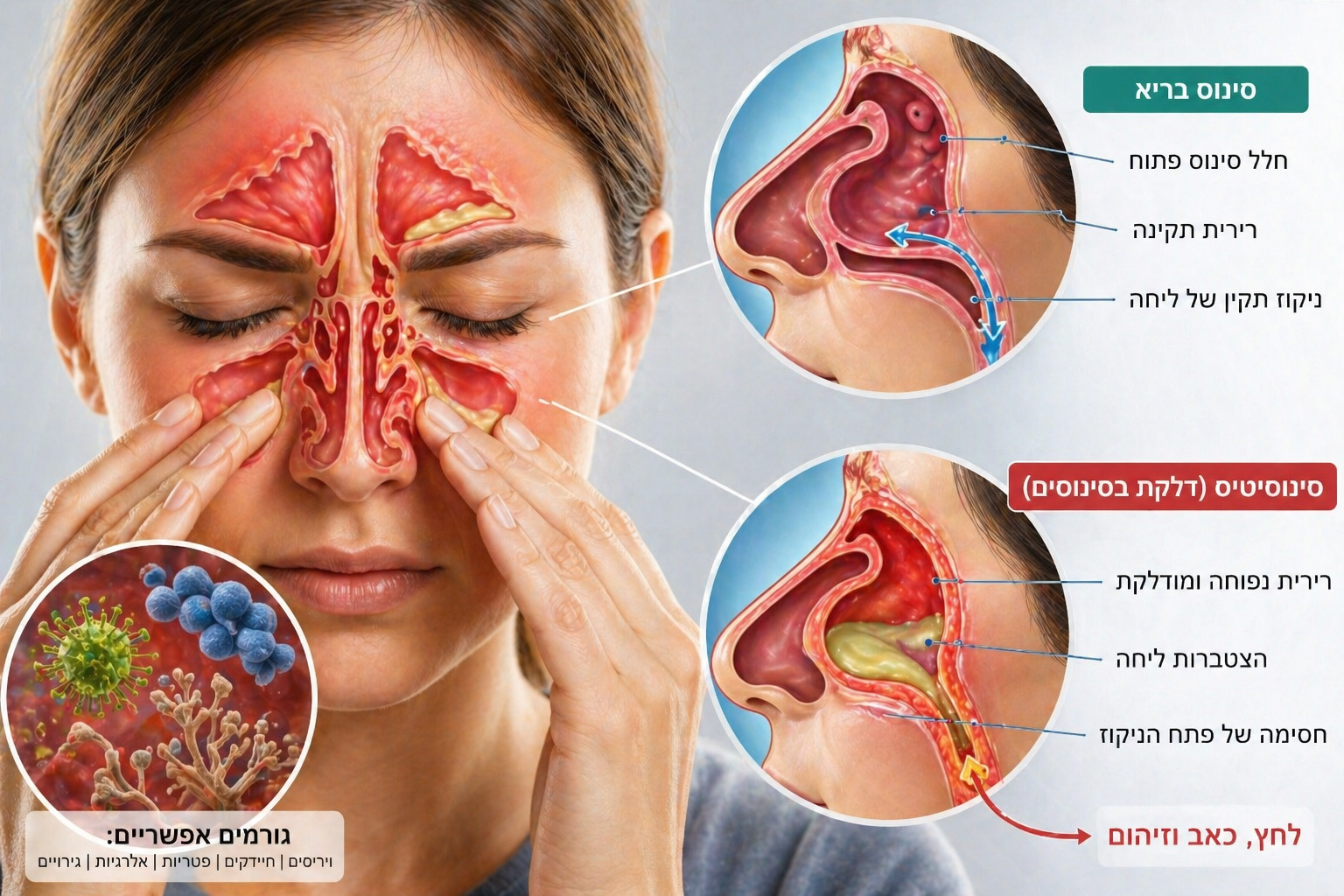
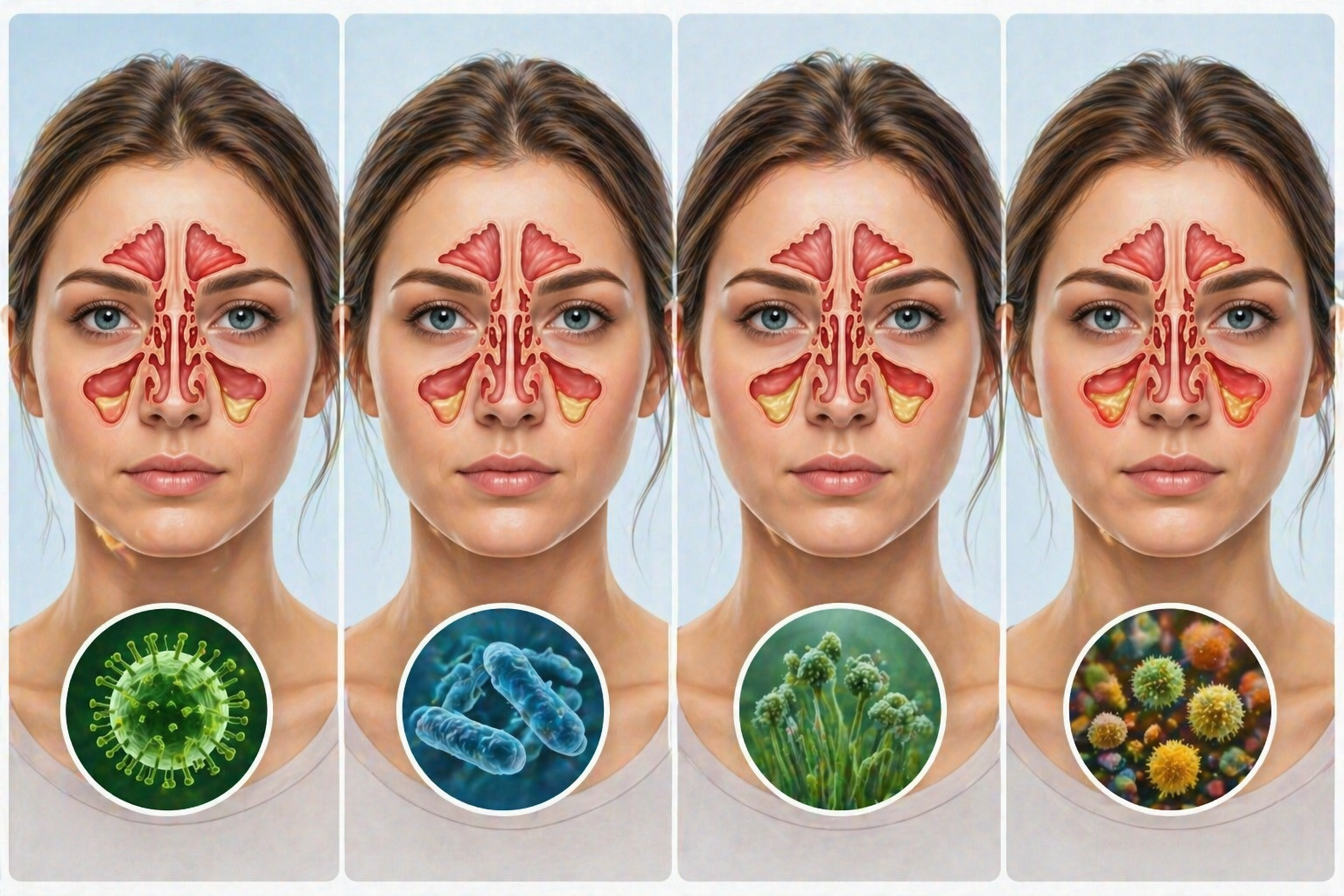
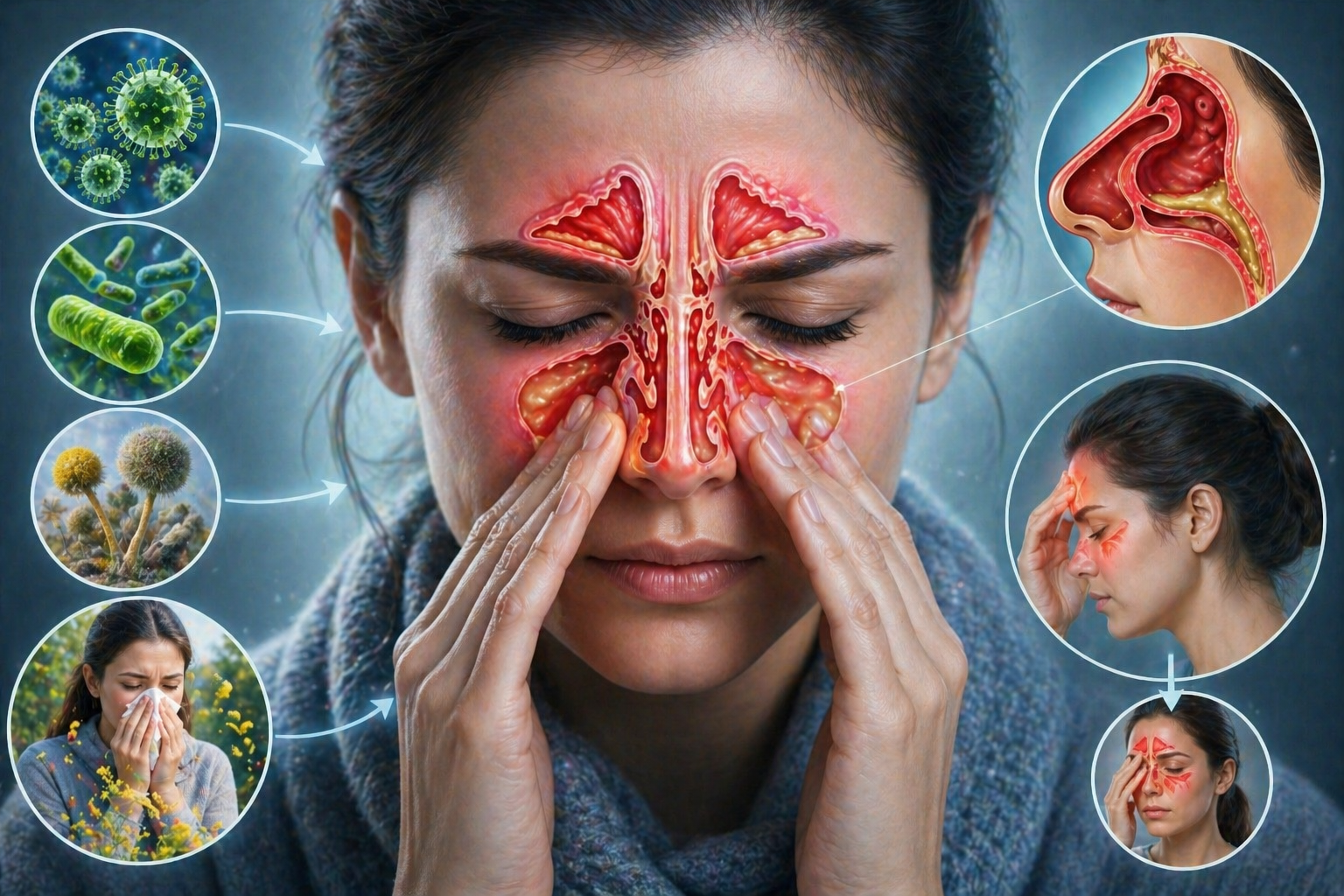
Sinusitis is an inflammation of the air spaces around the nose (the sinuses). The inflammation can be caused by an infection (virus, bacteria, or fungus), an allergy, or an environmental irritant.
When there is a blockage in the sinuses, the mucus does not drain – and pressure, pain and infection are created.
💡 Interesting fact: About 30 million adults suffer from sinusitis at some point in their lives.
What are the sinuses and what is their function?
The sinuses are air-filled spaces within the bones of the skull, connected to the nasal cavity.
Types of sinuses:
- Frontal sinuses (in the forehead)
- Maxillary sinuses (jaws)
- Ethmoidal sinuses (between the eyes)
- Sphenoidal sinuses (deep inside the head)
Their roles:
- Heating and humidifying the air we breathe
- Reducing skull weight
- Improving voice resonance
- Protecting sensitive structures such as the eyes and brain
Types of sinusitis – by duration
🔹 Acute sinusitis
Lasts up to about 10 days (usually viral)
🔹 Subacute sinusitis
Lasts up to 3 months
🔹 Chronic sinusitis
Lasts for over 3 months and sometimes recurs repeatedly
🔹 Recurrent sinusitis
How many seizures per year?
What causes sinusitis?
The main cause is blockage of sinus drainage.
Common causes:
- Cold (viruses)
- Allergies (dust, pollen, animals)
- Smoking
- Overuse of nasal sprays
- Bacterial infection
- Anatomical structure (deviated septum)
- Nasal polyps
Additional factors:
- Dehydration
- Dry air
- Thick mucus
- Damage to the cilia that clean the sinuses
Risk factors
- Chronic allergies
- Weak immune system
- Recurrent respiratory infections
- Children with foreign bodies in the nose
- Diseases such as diabetes
Symptoms of sinusitis
Most people experience several symptoms together:
Main symptoms:
- Pain and pressure in the face
- Headaches (worsen when bending forward)
- Nasal congestion
- Thick (yellow/green) mucus
- Decreased sense of smell
Additional symptoms:
- Cough (especially at night)
- Toothache
- Earache
- Fatigue
- Bad breath
- heat
💡 In allergic sinusitis – the discharge is usually clear and there is more sneezing and itching.
When should you see a doctor?
Seek medical attention if:
- Symptoms last for more than 10 days
- There is worsening after improvement
- High fever for more than 3–4 days
- Severe pain in the face or head
Urgent contact if there is:
- Confusion or altered state of consciousness
- Visual disturbances
- Stiff neck
- Severe pain that does not respond to painkillers
How is sinusitis diagnosed?
In most cases, the diagnosis is made based on symptoms and a physical examination.
Sometimes it will be required:
- CT or MRI
- Nasal endoscopy examination
- Laboratory tests
Sinusitis Treatment – What Really Works?
Treatment varies depending on the type of sinusitis:
Viral sinusitis
- Painkillers (paracetamol/ibuprofen)
- Medications to relieve congestion
- Heavy drinking
👉 Antibiotics do not help in this case
Bacterial sinusitis
- Antibiotics (such as amoxicillin)
- Treatment usually lasts 10–14 days.
Complementary treatments:
- Nasal rinses with salt water
- Steroid nasal spray
- Humidifier
- Hot drink

Grandma’s remedies and home tips
Things that help:
- Hot steam or a hot shower
- Warm compresses on the face
- Ginger or turmeric tea
- Heavy drinking
- Sleeping with your head elevated
Nose cleaning:
- Using a neti pot or douching kits
- Lukewarm water with salt
Possible complications
Although rare, untreated sinusitis can lead to:
- Chronic inflammation
- Decreased sense of smell
- Eye infections
- meningitis
- Brain abscess
❗ In severe cases – life-threatening
How can sinusitis be prevented?
Important tips:
- Keep the air moist.
- Avoid smoking
- Treat allergies
- Drink enough water
- Wash your hands and avoid infection
💡 Allergy testing can help those who suffer from recurrent sinusitis
Summary: Don’t underestimate the sinuses
Sinusitis is a common condition – but not always simple.
The difference between proper treatment and neglect can be very significant.
👉 If you are suffering from symptoms – don’t wait.
Early treatment can prevent complications and improve quality of life.